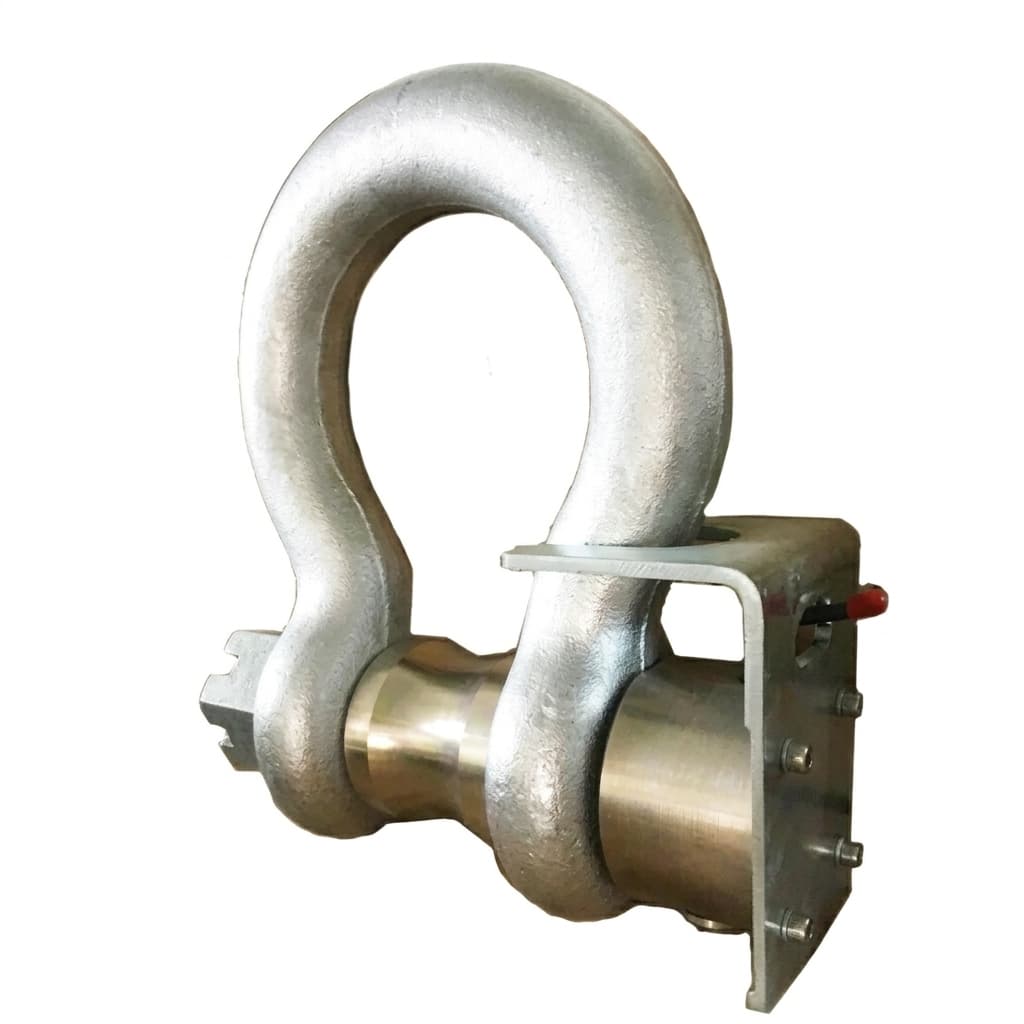
Wide-body load shackles start with the sling bearing surface.
For heavy-lift and offshore connections, define the crown contact, jaw opening and instrumented pin as separate interfaces. Send the rigging arrangement before fixing the body and test scope.
Standard instrumented-bow referencePin/bobbin arrangement reference, not a wide-crown specimen. The actual wide-body forging, dimensions and complete assembly rating require the project drawing and evidence.
THREE INTERFACES / ONE LOAD PATH
Separate crown bearing, jaw clearance and pin contact.
Crown and sling contact
Provide sling construction, loaded eye dimensions, contact width, minimum bearing requirements and the sling maker’s guidance.
Review question
Does the proposed surface support the intended sling without crowding or an unapproved bend?
Jaw and mating component
Identify the hook, padeye, link or plate thickness, articulation and the required assembly/removal clearance.
Review question
Can the connection move as intended without forcing a different load direction?
Pin and centralizing bobbin
Define the supported span, usable bobbin width, sensing orientation and how the keeper remains accessible.
Review question
Does the measurement setup represent the contact and support conditions of the installed assembly?
A larger crown is not a universal sling-strength multiplier.
Use the sling manufacturer’s definitions for bearing diameter/radius, eye width and any bend-ratio requirement. Record which dimensions the ratio refers to; do not apply a wire-rope rule blindly to a different sling construction.
Crosby publishes a dedicated wide-body manual with model-specific instructions. It is useful background on why the actual body matters, not a rating or approval for an LSH integration. Crosby 2160 wide-body instructions.
Required drawing inputs
WLL with units, sling/padeye drawing, crown and jaw interfaces, articulation, pin/bobbin contact and available handling envelope.
Controlled load direction
State inline, multi-leg or out-of-plane conditions for review. No generic side-load reduction table on this page authorizes a particular LSH assembly.
Confirm the proof facility as part of the design scope.
Nominal WLL alone does not specify fixtures, proof load, hold, loading orientation, inspection, handling equipment or witness attendance. Agree the actual procedure and acceptance criteria for the finished instrumented assembly.
Record facility capacity and usable test envelope, adapter/fixture charges, transportation, witness scheduling and the complete document list before booking work.
If a particular original manufacturer/body is required, state the exact identity and permitted modification scope. If an alternative forging is proposed, review its actual material, dimensions, origin records and approval basis.
A source name, similar appearance or body-only certificate does not resolve the sensing pin or the completed assembly. The original body maker’s restrictions and responsibility for approving the changed configuration belong in the written scope.
Use a project request instead of an unverified tonnage chart.
State the load you need rather than inferring availability from a website range. Wide-body crown dimensions, pin geometry, mass and complete-assembly WLL are supplied against a selected design and drawing revision. The general WLL enquiry directory is a starting point, not a dimensional schedule for this family.
Choose bridge, amplified, digital or above-water telemetry output for review, then identify the readout and required documents. A load sensor option does not change the need to qualify the load-bearing connection.
DRAWING REVIEW / EMAIL RFQ
Build a specification your engineer can review.
Choose the connection, signal and documents. Review the complete English RFQ, then open your email app or copy it into your existing project thread.
Attach your drawing in your own email app. Company information and selections stay in this browser until you choose to send or copy them.
Selected option allowancesProject quote
Budget additions only. Items marked Project quote, the base assembly, interface matching and third-party attendance are quoted separately.
Your email app sends the message. Attach drawings there. Copy RFQ also keeps the complete text for your existing project thread.
BEFORE YOU ISSUE THE RFQ
Wide-crown geometry, high-capacity requests and body evidence
Does a wide opening make a shackle a wide-body design?
Crown bearing geometry, jaw opening and usable pin/bobbin width are different dimensions. Define each against the sling and mating components; a wide jaw alone does not establish a suitable bearing surface.
Can I order a 1,500t rated assembly from this page?
The page does not establish a 1,500t supply rating or stock model. Submit the actual WLL, load path, interface geometry and verification requirements. The offered design and complete assembly rating require project-specific evidence.
Can a heavy-lift body use a replacement sensing pin without further review?
The body, pin material/geometry, retention, contact arrangement and calibration setup must be reviewed as a complete configuration. Do not automatically carry a bare-body rating or document into a changed instrumented assembly.
Is the photographed body a verified wide-body specimen?
The photo is explicitly a standard instrumented-bow reference used to identify the pin/bobbin arrangement. It does not establish wide-crown dimensions, a high-capacity rating or the final offered forging. Request the actual assembly drawing and reference evidence.