Wired measurement
Define the complete signal path and all devices at the classified boundary. Supply and interface assessment belongs to the selected equipment and installation.
CLASSIFIED LOCATION / COMPLETE INSTRUMENT CHAIN
Start an ATEX or IECEx load-shackle enquiry with the site's hazardous-area classification and the identities of every device that will enter it. A forged body, radio label or familiar connector does not identify the approved electrical configuration.
Engineering selection resource · Reviewed
START THE REVIEW HERE
INSTRUMENTED SYSTEMS / 01
Record the proposed sensor model, electronics variant, battery type, cable or connector arrangement and the location of the receiver. A certificate number for a related instrument is a useful lead, but it does not identify the equipment you will actually install.
IECEx uses an X suffix to identify specific conditions of use. Read the applicable certificate and its conditions with the manufacturer's instructions. Do not fill an unresolved condition with an assumption taken from a standard outdoor shackle.
| Review item | Project information to collect | What remains separate |
|---|---|---|
| Location | Zone or site classification; gas/dust and group; required protection level | The site's classification is supplied by its responsible party. |
| Equipment identity | Exact manufacturer, model, revision and complete marking | Brand names and enclosure appearance do not establish approval. |
| Conditions | Ambient range, temperature requirement, installation and use conditions | An X suffix directs attention to specific certificate conditions. |
| Accessories | Battery, charger, receiver, connector and accessory identities | A changed accessory may fall outside the assessed configuration. |
Source context: IECEx: specific conditions of use and the X suffix · Kito Crosby: Wireless Loadshackle user manual
INSTRUMENTED SYSTEMS / 02
For a PLC connection, collect the proposed input module and interface documents rather than requesting a generic pinout. For a handheld, state whether it will be carried inside the classified location. These choices affect the configuration that must be reviewed.
If an intrinsically safe loop is proposed, identify the associated apparatus, control drawing and the sensor entity parameters, together with cable capacitance and inductance. The selected system documents must establish compatibility; this page supplies no barrier values or wiring approval.
Collect any electrostatic, impact, cleaning and accessory restrictions in the actual certificate conditions. Do not assume the conditions for one enclosure or model apply to another.
Define the complete signal path and all devices at the classified boundary. Supply and interface assessment belongs to the selected equipment and installation.
Locate both the transmitter and receiver. Ordinary radio approval and hazardous-area assessment address different questions.
Specify where batteries are replaced, how equipment is isolated and which accessories may enter the area. Follow the selected product's instructions.
Source context: IEEE 802.3: powering an intrinsically safe system · IECEx: specific conditions of use and the X suffix
INSTRUMENTED SYSTEMS / 03
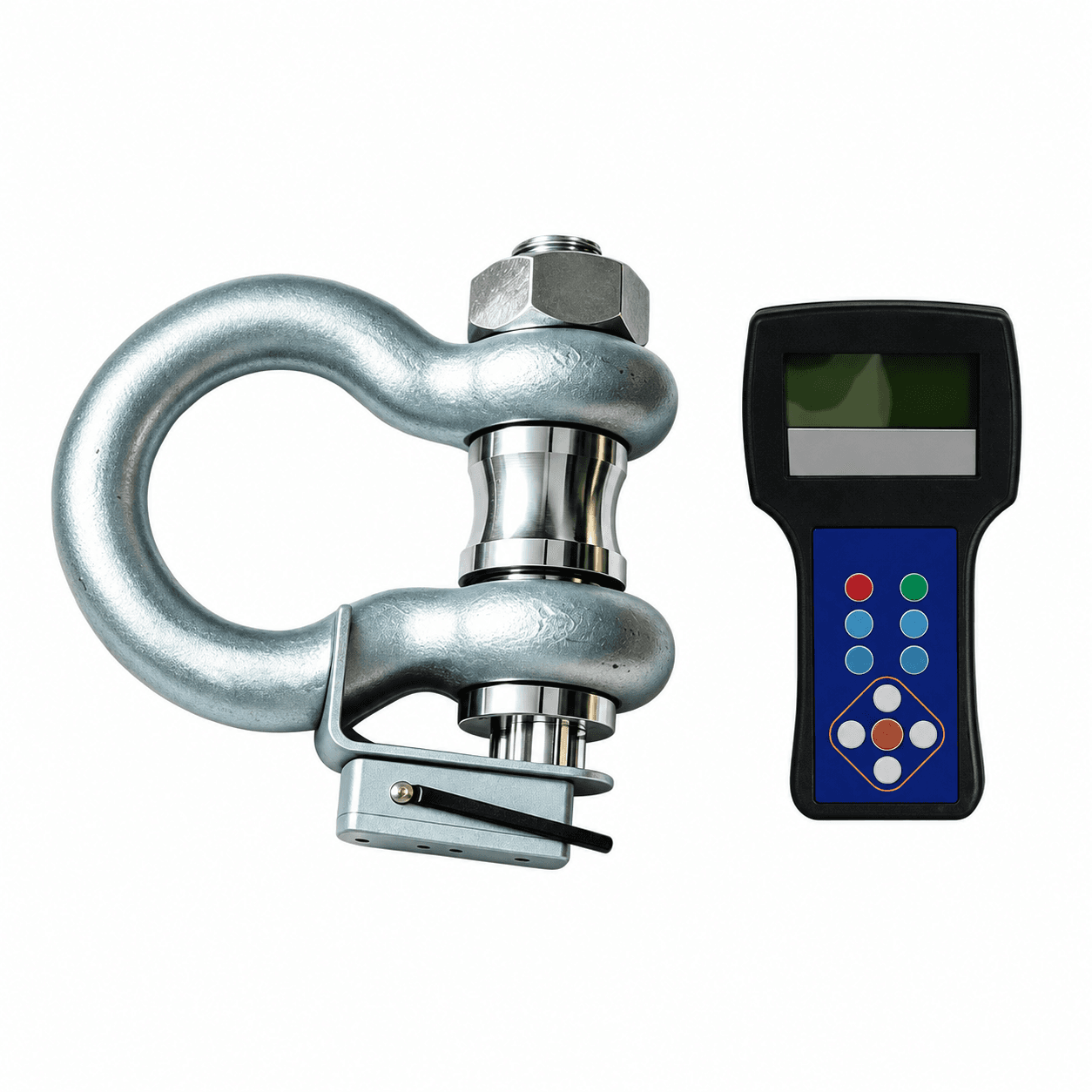
The body, sensing pin, centralizing contact and retention still form a load-bearing assembly. Request its drawing, rating, calibration arrangement and inspection scope independently of the electrical certificate. A protection marking does not establish bow geometry, allowable side loading or a load-shackle WLL.
A useful quotation package identifies both evidence chains: the lifting assembly and the electrical configuration. State the destination market and the intended duty so that the applicable document scope can be agreed.
INSTRUMENTED SYSTEMS / 04
Blank project-input worksheet. Not an approved design, operating procedure, product specification or certificate.
Download PDFDownload text versionOr prepare the request online →MANUFACTURER / STANDARDS / REGULATOR CONTEXT
IECEx Secretariat notice, June 2019. A certificate-specific reference, not evidence of any LSH approval.
Straightpoint Issue 3, December 2025. Standard and hazardous-area configurations are separate manufacturer products.
Original technical presentation on apparatus and cable parameters; not an LSH control drawing or approved wiring configuration.
These references explain selection questions. The actual offered configuration, rating, instructions and records must identify the supplied assembly.
BEFORE YOU ISSUE THE RFQ
Use only the configuration assessed and accepted for that location. An outdoor radio model or IP rating does not establish hazardous-area suitability.
Identify the handheld separately, including where it will be used. Its batteries, accessories and applicable documents are part of the system review.
It indicates specific conditions of use. Review the actual certificate and manufacturer instructions; do not treat the suffix as an optional note.
No. Request the rating and configuration records for the complete load-bearing assembly separately.
State the required signal and receiving equipment. The availability and assessed configuration of that interface must be confirmed for the offered model.
This page collects a project-specific configuration request. It does not publish a verified certified-model list, stock commitment or universal delivery time.
PROJECT INPUTS / EMAIL HANDOVER
Enter what is known and leave unresolved values blank. Your choices stay in this browser until you copy them or open your email application.
List the drawing and requested records. Supply scope and availability are confirmed after reviewing the actual configuration.
Open worksheets and the NDA draft in a new tabYour email app sends the message. Attach drawings there. Copy request also keeps the complete text for your existing project thread.