Sensor and contact
Jaw, bobbin contact, pin retention, mating eye and available headroom must suit the actual rigging connection.
TRUSS / CHANNEL MAP / BLACK FINISH REQUEST
Specify a stage load-monitoring kit around the rigging plan: the identity of each point, the requested measurement range and the way the crew will receive and record readings. Black finish is an optical requirement; point capacity and system behavior need their own review.
Engineering selection resource · Reviewed
START THE REVIEW HERE
INSTRUMENTED SYSTEMS / 01
A point count is a planning choice, not a capacity calculation. List each suspension point and its requested range against the rigging drawing. Nominally similar hoists or an evenly spaced truss do not establish equal reactions.
Use a channel map that stays understandable during installation, rehearsal and recovery. Tie the sensor serial identity to a point label and the display name; identify who verifies that map before the system is relied upon.
| Planning example | Point-label pattern | Information still required |
|---|---|---|
| 4 points | A1–A4 | Individual point reactions, selected ranges and receiver capacity |
| 8 points | A1–A4 plus B1–B4 | Cross-truss mapping, logging and operator views |
| 12 points | Three labelled groups of 4 | Channel identity, radio environment and response responsibilities |
INSTRUMENTED SYSTEMS / 02
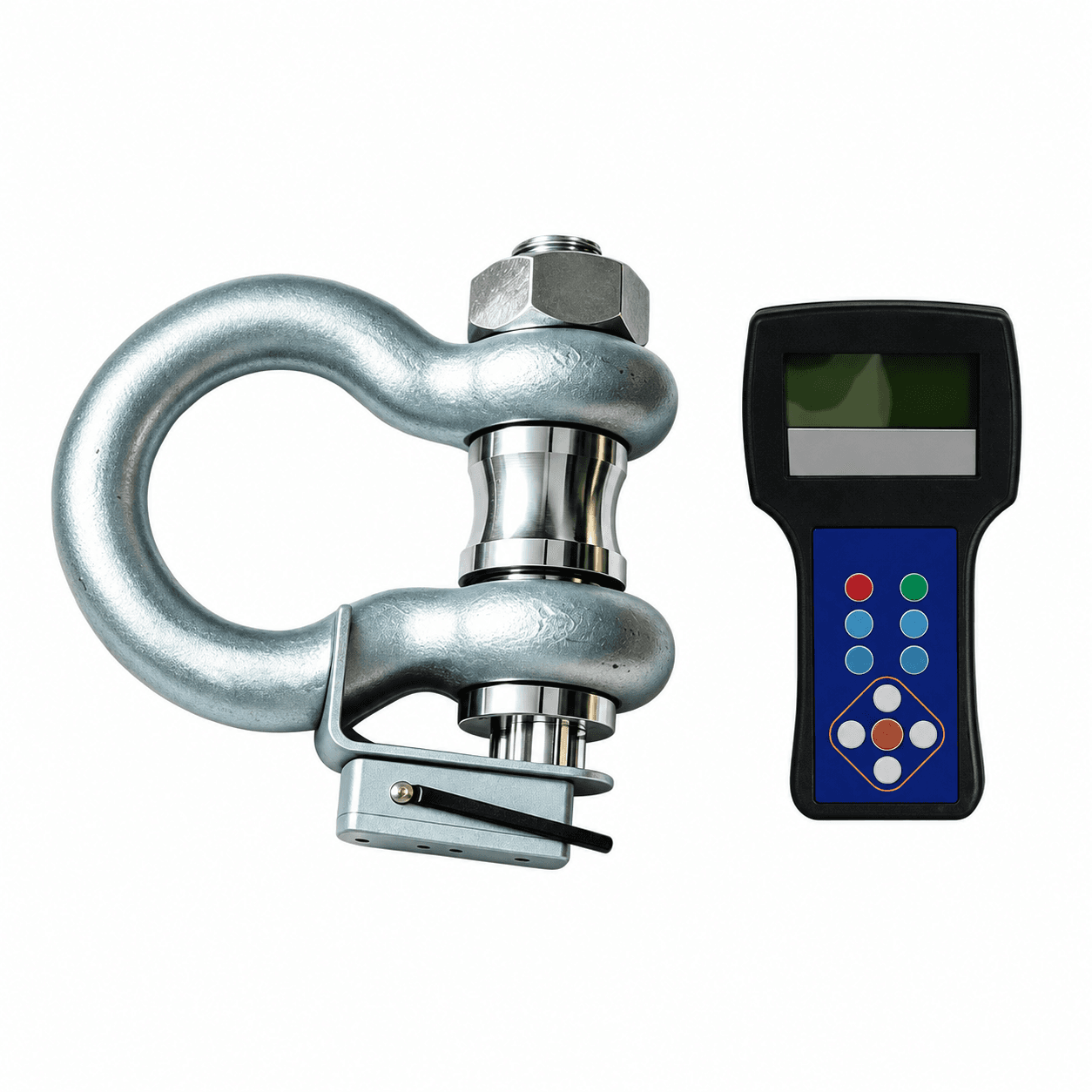
Manufacturer systems such as Broadweigh separate sensors from receiver and software choices. That is a useful procurement distinction, not a declaration that an LSH sensor connects to another maker's software. Request the actual supported combination and the configuration record.
Jaw, bobbin contact, pin retention, mating eye and available headroom must suit the actual rigging connection.
Request the supported protocol, number of simultaneous channels and regional configuration. A frequency label alone does not establish pairing.
Specify point names, units, update behavior, timestamps, export format and the crew's operating view.
Source context: Broadweigh: wireless sensor range · Broadweigh: configuration and logging software
INSTRUMENTED SYSTEMS / 03
Do not apply a cosmetic finish to load-bearing parts without the hardware manufacturer's process approval. The offered finish and its inspection requirements must be specified for the actual assembly. A black surface does not establish entertainment-system conformity.
| Requirement | State it in the enquiry |
|---|---|
| Optical appearance | Non-reflective finish, visible surfaces and acceptable identification treatment |
| Mechanical interfaces | Mating eye width, contact location and articulation clearance |
| Traceability | Point labels, serial records and calibration chain |
| Maintenance | Battery access, inspection intervals and coating damage review |
INSTRUMENTED SYSTEMS / 04
Document what the operator does when a reading is unusual, a channel is lost or the display loses power. A warning shown on a screen is not, by itself, an approved machine safety function. Any connection to a hoist controller needs a separate system-level review.
Request an identification check, receiver pairing record and calibration scope for the supplied set. Agree any on-site checks with the responsible rigging team; this page does not set show-operating thresholds or approve a lift.
Blank project-input worksheet. Not an approved design, operating procedure, product specification or certificate.
Download PDFDownload text versionOr prepare the request online →MANUFACTURER / STANDARDS / REGULATOR CONTEXT
Manufacturer example of model-specific stage-monitoring sensors; not an LSH range or compatibility declaration.
Software is a separate system element, with its own hardware and configuration scope.
These references explain selection questions. The actual offered configuration, rating, instructions and records must identify the supplied assembly.
BEFORE YOU ISSUE THE RFQ
These are supported enquiry layouts. List the points and requested ranges; the actual compatible hardware, channel capability and supply scope require confirmation.
That distribution cannot be assumed from point count. Use the responsible engineer's load case and consider actual geometry, stiffness and operating conditions.
Those capacities occur in other manufacturers' product families, but they are not published here as verified LSH stage-assembly ratings. State the required value in the request.
Only if the selected sensor, app and architecture support the required channels and operating workflow. Identify the actual software and receiver.
No. Agree the applicable requirements and obtain configuration-specific evidence for the complete system.
Specify sensor identities, point/channel map, supported receiver/software, calibration scope, instructions, accessories and the required project records.
PROJECT INPUTS / EMAIL HANDOVER
Enter what is known and leave unresolved values blank. Your choices stay in this browser until you copy them or open your email application.
List the drawing and requested records. Supply scope and availability are confirmed after reviewing the actual configuration.
Open worksheets and the NDA draft in a new tabYour email app sends the message. Attach drawings there. Copy request also keeps the complete text for your existing project thread.